Best Overall
FR Score 9.0 out of 10, Exceptional
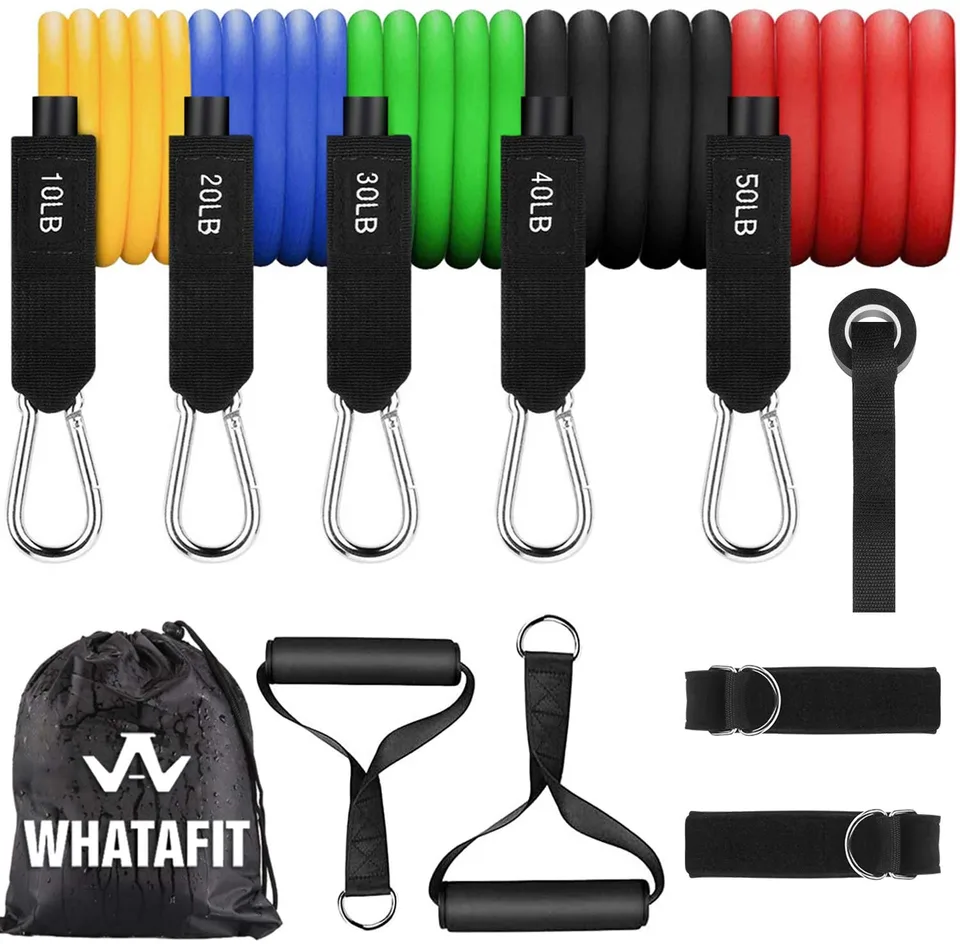
WHATAFITResistance Bands
Resistance Bands with Handles (150 lb Set)
Five stackable tubes, handles and a door anchor: a full-body home gym for about $22.
3 videos
AmazonBrand store
Loop, tube, fabric and therapy bands, ranked by what reviewers actually recommend.
Resistance bands are the cheapest, most portable way to add real resistance to home workouts, but the category covers very different tools. Small latex loops and fabric hip bands are built for glute activation and warmups. Tube sets with handles and a door anchor mimic cable-machine training for the whole body. Long 41-inch power bands handle pull-up assistance, mobility work and extra tension on barbell lifts. And flat therapy bands, like THERABAND's, remain the standard in physical therapy clinics.
Our top picks
products
Five stackable tubes, handles and a door anchor: a full-body home gym for about $22.
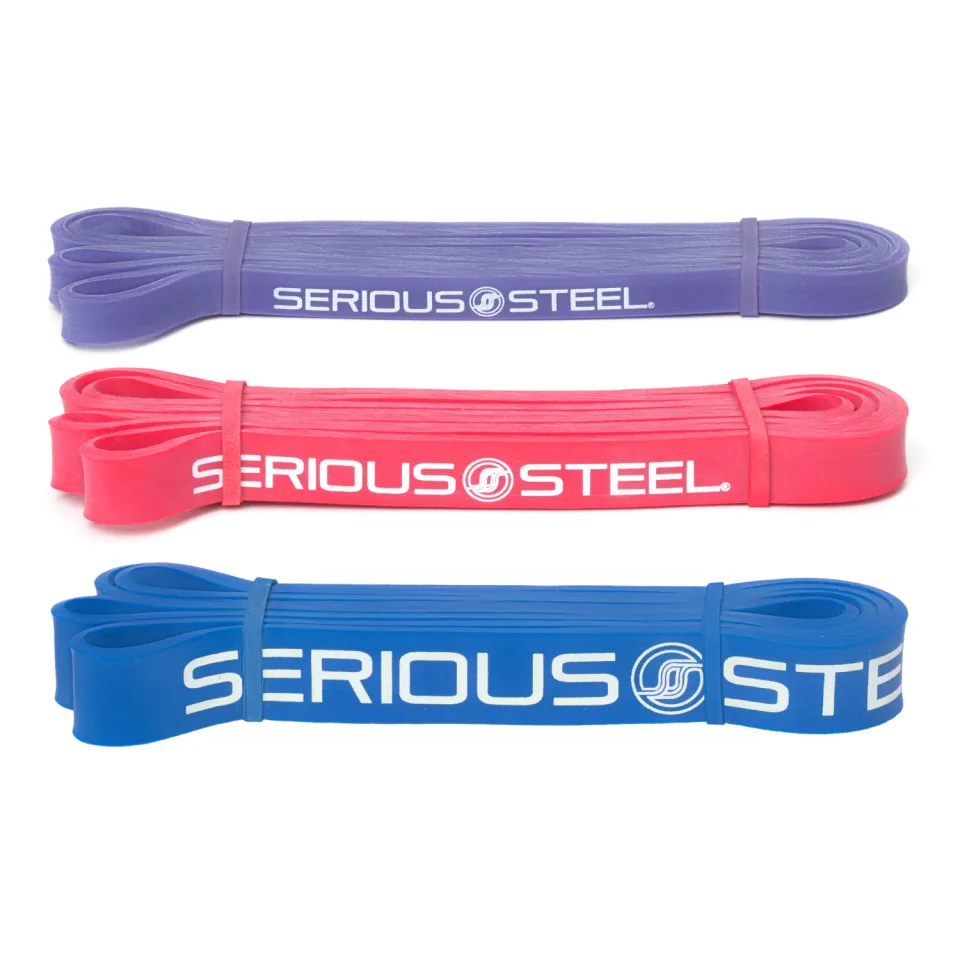
Thick, 15-layer latex power bands for pull-ups, mobility and heavy strength work.
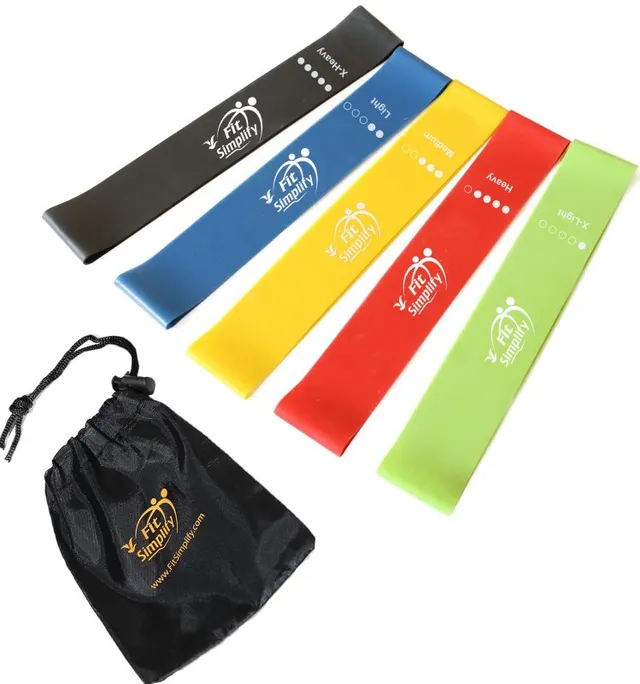
Go-to mini loop bands: five levels, a carry bag and a guide for about $10.

Non-slip fabric hip bands that won't roll, pinch or snap mid-squat.

The physical-therapy standard: color-coded flat bands for gentle, precise progress.
Buying guide
The handful of things that actually matter — and the marketing you can ignore.
Match the band to the job. Tube bands with handles and a door anchor are the most versatile option for presses, rows, curls and other full-body strength work. Latex mini loops, usually about 12 inches long, and fabric hip bands are designed for squats, bridges, lateral walks and warmups. Long 41-inch loop power bands excel at assisted pull-ups, stretching and adding resistance to barbell lifts. Flat therapy bands are gentle, precise and easy to tie into loops, which is why physical therapists rely on them. Many people end up owning two types: a tube set for the upper body and loops for the lower body.
Band tension rises as you stretch, so a rating like 10–50 lb describes a range rather than a fixed weight. Look for brands that print resistance levels on each band and explain how they measured them; Serious Steel, for example, publishes the stretch lengths behind its ratings. Stackable tube sets let you combine bands in roughly 10-lb steps, which makes steady progression much easier. For loop and fabric bands, a light-medium-heavy trio covers most lower-body work, but stronger lifters will want heavier options sooner than they expect.
Most bands are natural latex, which is elastic and durable but a problem for anyone with a latex allergy; non-latex options such as THERABAND's synthetic bands solve that. Layered latex, like Serious Steel's 15-layer construction, holds up better to heavy use than thin single-layer loops. Fabric hip bands don't roll up or pinch skin, and reviewers consistently prefer them for glute work. Whatever you buy, check bands before each session for nicks, store them away from heat and direct sunlight, and anchor them to smooth, secure surfaces.
Handles, ankle straps, a door anchor and a carry bag turn a band set into a genuine home gym, so compare what's included rather than just the number of bands. Printed guides and workout videos help beginners more than you might expect. Check the warranty terms too: WHATAFIT's website lists an 18-month warranty for quality issues on its tube sets, and Fit Simplify advertises a lifetime money-back guarantee. If you travel, a set that packs into a small pouch is worth more than an extra band you'll leave at home.
Video reviews
Head-to-head
Side-by-side comparisons of the resistance bands people most often weigh against each other.
From the blog
Resistance bands are the cheapest, most portable way to add real resistance to home workouts, but the category covers very different tools. Small latex loops and fabric hip bands are built for glute activation and warmups. Tube sets with handles and a door anchor mimic cable-machine training for the whole body. Long 41-inch power bands handle pull-up assistance, mobility work and extra tension on barbell lifts. And flat therapy bands, like THERABAND's, remain the standard in physical therapy clinics.
For this list, we synthesized independent video reviews, including owners reporting two to four years of use, and checked each set's materials, tension ratings, included accessories, warranty and street price. Scores weigh build quality and durability, performance and feel, ease of use and footprint, and value for money.
The short version: most shoppers should start with a tube set with handles for full-body training, add fabric or latex loops for lower-body work, and step up to heavy-duty 41-inch bands if pull-ups or strength training are the goal. Whatever you buy, inspect your bands regularly, because reviewers agree that a nicked or worn band is the one that snaps.
The research, standards and guidance behind this resistance bands guide.