Walking Pad vs. Treadmill: Which One Fits Your Space and Goals?
Walking pads win on price, noise, and storage; treadmills win on speed, incline, and running comfort. Here's how to match the machine to your space and goals.
9 min read17 sources
On this page
- Walking pad vs. treadmill at a glance
- What a walking pad does well
- What the research says about walking while you work
- What a treadmill does well
- The middle ground: 2-in-1 walking pads
- Measure before you buy
- Hidden costs to budget for
- Treadmill safety at home
- Which one should you buy?
- The bottom line
- Frequently asked questions
- References
Few home-fitness gadgets have taken off like the walking pad. It slides under a desk, hums along quietly, and turns an ordinary workday into thousands of extra steps. But a walking pad isn't a treadmill, and buying the wrong machine is an expensive, heavy mistake. Here's how to match the machine to your space, your body, and what you actually want to do on it.
Walking pad vs. treadmill at a glance
| Walking pad | 2-in-1 walking pad | Folding treadmill | |
|---|---|---|---|
| Top speed | About 4 mph | About 6 mph with handle up | Up to about 12 mph on running models |
| Incline | Usually none; some newer models add it | Usually none; some newer models add it | Often up to 10–12% |
| Belt size | Around 15 x 40 in (some longer) | Around 15 x 40 in | Around 20 x 60 in on running models |
| Handrails | None | Fold-up handle | Full rails and console |
| Weight | About 50 lb | About 50 lb | Far heavier (T Series 10: 250 lb boxed) |
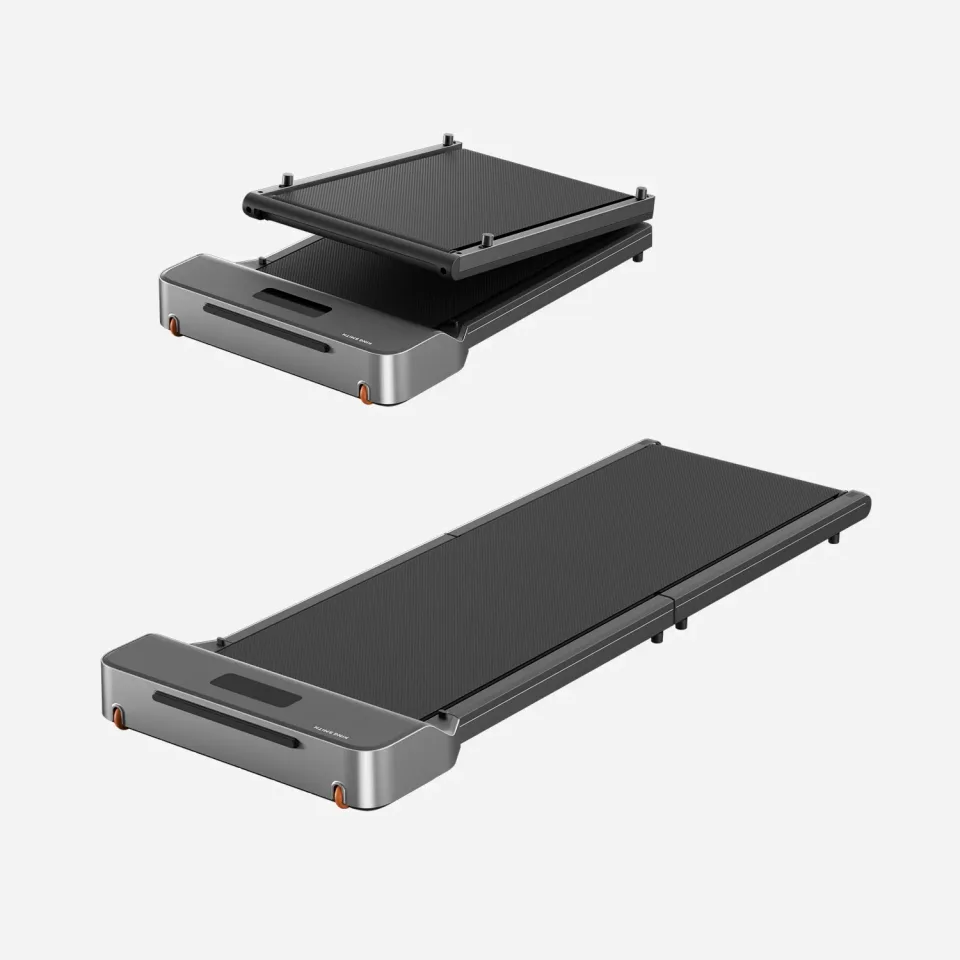
| Storage | Under a bed or sofa; some fold in half | Handle folds flat; full length remains | Deck tilts upright but stays heavy |
| Price | $–$$ | $ | $$$ |
| Best for | Desk walking and daily steps | Walking plus light jogging | Running, incline training, multiple users |
What a walking pad does well
It makes walking easy to fit in. Most walking pads are designed to sit under a standing desk. Raise the desk by roughly the height of the deck (about 4 inches on the WalkingPad Z1 [1]) so your elbows stay level with the keyboard, keep the pace slow while you type, and speed up during calls or breaks. That split matters. U.S. physical activity guidelines recommend 150 to 300 minutes of moderate activity a week for adults, and brisk walking at 2.5 to 4 mph counts, while strolling at 2 mph or less is light activity [2]. Since 2018, the guidelines have also counted bouts of any length toward that total [2]. Slow desk walking mainly breaks up long stretches of sitting; brisk walks during calls and breaks chip away at your weekly minutes. Pair it with a fitness tracker and watching your step count climb becomes its own motivation.
It disappears when you're done. A walking pad needs roughly 5 by 2 feet of floor in use, plus clearance behind it, and it can slide under a sofa or bed if there's a gap of at least 5 to 6 inches. The WalkingPad Z1 folds in half, shrinking from about 56 to 32 inches long and standing 5.4 inches tall when folded [1], and reviewers consistently single out its quiet brushless motor and how quickly it folds.
It's cheaper and quieter. Walking pads usually cost a fraction of a running treadmill, and their motors are modest. The bigger noise issue is footfall thump and vibration traveling through floors, which a dense rubber mat helps with.
Where walking pads fall short
- Speed. Most stop around 4 mph: a brisk walk, not a jog. The Z1 tops out at 4 mph [1].
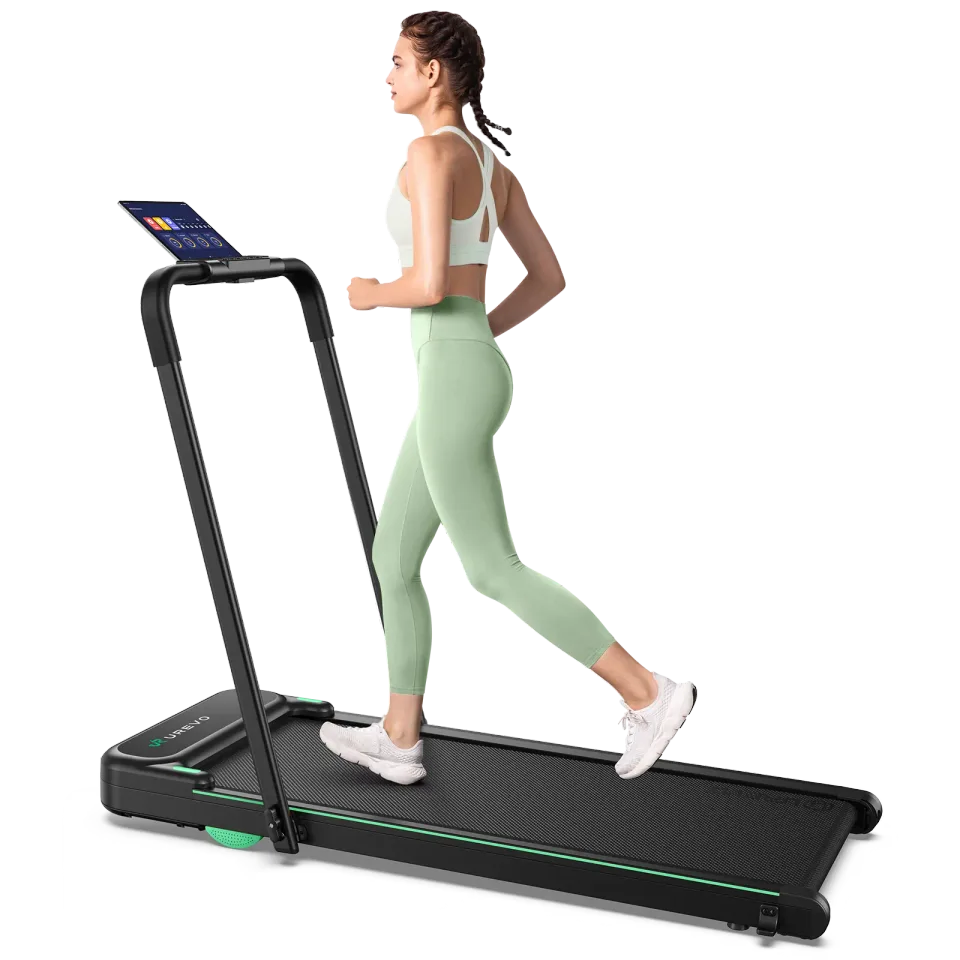
- Incline. Many have none, so hill-walking workouts are off the table. Some newer walking pads do add incline; UREVO, for example, lists models with up to 9% or 14% [3].
- Deck size. Belts around 15 by 40 inches suit most walkers, but people with long strides can feel cramped. The Z1's 47.6-inch walking area is one reason taller walkers like it [1].
- Support. Many have no handrail, and capacities run lower: 242 lb for the Z1 [1] and 265 lb for the UREVO Strol 2E [3].
- Warranty. Budget pads often carry just a one-year warranty, as both of these do [1, 3].
What the research says about walking while you work
Walking pads are new, but treadmill desks have been studied for years. The evidence is encouraging, with caveats:
- Slow walking still beats sitting. In a small lab study of 15 office workers with obesity, walking and working at a self-chosen 1.1 mph burned about 119 more calories an hour than seated work (191 vs. 72) [4].
- A treadmill desk can raise daily activity. In a one-year trial, 36 office workers given treadmill desks moved more each day and cut sedentary time by about 90 minutes a day at six months and about 40 minutes at a year, with no change in work performance. Average weight loss was modest, about 3 lb (1.4 kg) [5].
- Bigger reviews are more cautious. A Cochrane review found low-quality evidence that sit-stand desks cut sitting at work by about 100 minutes a day in the short term, while treadmill and cycling desks had unclear or inconsistent effects on sitting time [6].
- Typing may suffer a little. A systematic review found that some treadmill- and cycling-desk studies identified potential drops in performance during use, while studies lasting 12 to 52 weeks found no significant effect on productivity [7]. That's the case for slow speeds while you type and brisker walking on calls.
Extra steps are the other draw. In a pooled analysis of 15 cohorts with 47,471 adults, more daily steps were linked to progressively lower risk of death, leveling off at about 6,000 to 8,000 steps a day for adults 60 and older and 8,000 to 10,000 for younger adults [8]. A 2025 meta-analysis put the risk 47% lower at 7,000 steps a day than at 2,000 [9]. And in a nationally representative sample of U.S. adults 40 and older, step intensity wasn't linked to mortality once total steps were accounted for [10]. These are observational associations rather than proof, but they suggest unhurried desk steps still count.
What a treadmill does well
It lets you run. If you plan to jog or run even occasionally, the deck matters as much as the motor. Running treadmills have far bigger belts: the T Series 10's measures 20 by 60 inches, and it reaches 12 mph [11], compared with roughly 15 by 40 to 48 inches and 4 mph on the walking pads above [1, 3]. If you're tall or plan to run fast, favor a long deck.
It turns walking into a workout. Incline is the easiest way to raise intensity without running faster. That's why the viral "12-3-30" routine (walking at a 12% grade at 3 mph for 30 minutes) calls for a machine with real incline; a flat walking pad can't do it. In a small lab study, 12-3-30 took longer than self-paced running to burn the same number of calories but drew a higher share of its energy from fat, which isn't the same as losing more body fat [12]. If walking is your main workout, a 10–12% incline range is worth paying for.
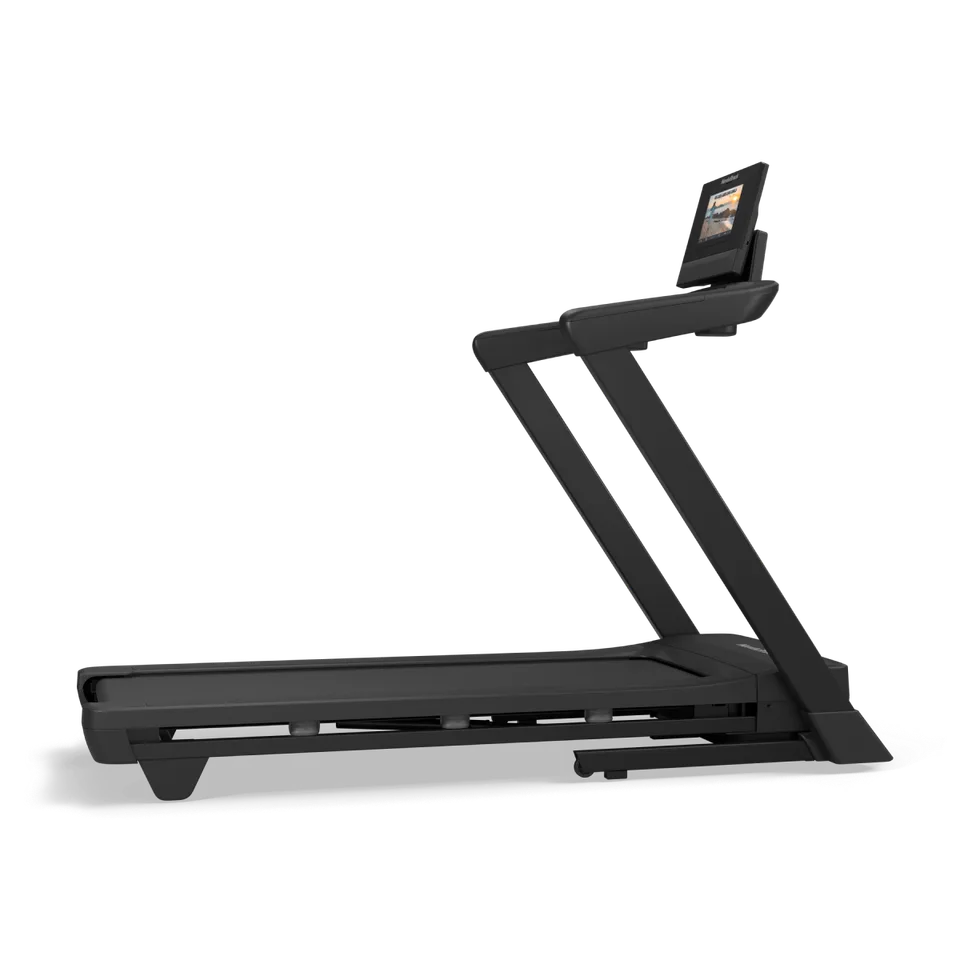
It feels more substantial. Full treadmills add handrails, cushioning, higher weight capacities, and built-in programs. The NordicTrack T Series 10, for example, pairs its 20 x 60-inch deck with 0–12% incline, adjustable SelectFlex cushioning, and a 325 lb user capacity [11]. Treadmill-focused reviewers say its deck and motor meet their bar for running.
Where treadmills fall short
- Size and weight. Folding treadmills tilt the deck upright to save floor space, not weight. The T Series 10 ships at 250 pounds in its box and covers about 75 by 34 inches of floor, or 41 by 34 inches folded [11], so plan where it will live before assembly day.
- Subscriptions. Many connected treadmills put classes behind a membership. NordicTrack says the T Series 10's speed and incline work manually without a paid plan, though a free iFIT account is required to operate it; the paid membership adds guided workouts and automatic speed and incline changes [11].
- Noise. Running is loud on any machine. If you have downstairs neighbors, that matters.
The middle ground: 2-in-1 walking pads
A 2-in-1 is a walking pad with a fold-up handle that unlocks a faster running mode. The UREVO Strol 2E runs from 0.6 to 4 mph as a pad and reaches 6.2 mph with the handle raised, yet folds flat to 4.6 inches tall [3]. Reviewers love the price and quiet motor, but its 40 x 15-inch running area [3] is tight for jogging strides. Think of a 2-in-1 as a walking machine that tolerates light jogging, not a runner's treadmill.
Measure before you buy
Run through this checklist before anything goes in your cart:
- Floor space in use. Allow roughly 5 by 2 feet for a walking pad (the Z1 is about 56 by 22 inches unfolded [1]), plus clearance behind it. Treadmills need considerably more, so check the manual for required clearances.
- Storage. Measure the gap under your bed or sofa: the Z1 stands 5.4 inches tall folded [1], and the Strol 2E 4.6 inches [3]. For a folding treadmill, measure the upright footprint and the path to wherever it will live.
- Ceiling height. For running, add the deck's step-up height (8.3 inches on the T Series 10 [11]) plus room for bounce to your own height.
- Weight capacity. Choose a machine rated comfortably above your body weight, not right at it.
- Floors and neighbors. A dense rubber mat protects floors and dampens vibration. Slower speeds, cushioned training shoes, and daytime jogging keep the peace.
Hidden costs to budget for
- Subscriptions. Factor any membership into the true cost of ownership, and check what works without one.
- A mat. Nearly every machine benefits from one.
- Maintenance. Belts need periodic lubrication on the schedule in your manual. UREVO's support page, for example, lists lubricating the belt as the first fix for a noisy or shaking belt or a burning smell [13].
- Warranty terms. Established treadmill brands often pair long frame coverage with shorter parts and labor terms. The T Series 10 carries a 10-year frame, 2-year motor and parts, and 1-year labor warranty [11].
Treadmill safety at home
Moving belts deserve respect. In U.S. emergency room data from 2007 to 2011, treadmills accounted for 66% of an estimated 70,302 injuries linked to home exercise machines such as treadmills, ellipticals and stationary bikes [14]. Young children are especially at risk: in a study of home exercise equipment injuries to U.S. children from 1990 to 2008, treadmills were involved in about a quarter of cases, and kids under 10 accounted for 71.4% of all the injuries [15]. In 2021, Peloton recalled about 125,000 Tread+ treadmills after a 6-year-old died and the company received 72 reports of adults, children, pets or objects being pulled under the rear of the machine [16]. ASTM F2115, the industry safety standard for treadmills, is written for users 13 and older and calls for a clearly labeled stop switch and a rear roller designed or guarded against finger entrapment [17].
Safety note: Keep kids and pets out of the room while the belt is moving, clip the safety key to your clothing if your machine has one, and unplug it and store the key out of reach when you're done. If you have a heart condition, joint or balance issues, are pregnant, or are returning to exercise after a long break, check with a clinician before starting a new routine.
Which one should you buy?
Choose a walking pad if you work at a standing desk, want more daily steps, have limited space, and have no plans to run.
Choose a 2-in-1 if you mostly walk but want the option of an easy jog without giving up under-bed storage.
Choose a treadmill if you run, want incline training, have a long stride, or share the machine with several people.
Not sold on walking at all? A rower or indoor bike offers low-impact cardio in a different footprint. The Concept2 RowErg is the benchmark rower, and the YOSUDA Indoor Cycling Bike is a popular budget pick. Compare everything in our cardio machines category, see the ranked best cardio machines, or watch real owners put these machines through their paces on our video hub.
The bottom line
If your goal is more daily movement, especially while you work, a walking pad is the smarter, cheaper, more space-friendly buy. Keep it slow while you type and brisk when you can, because brisk walking is what counts toward your weekly activity target. If you want to run, train on hills, or share a machine with the household, a real treadmill is worth its bulk and price. A 2-in-1 splits the difference for walkers who want an occasional easy jog.
Frequently asked questions
Can you lose weight with a walking pad?
How fast should you walk on a walking pad while working?
Can you run on a walking pad?
How many steps a day should you aim for?
Is a walking pad safe?
References
- 1.WalkingPad Z1 Folding Under Desk Treadmill — WalkingPad (manufacturer specifications)
- 2.Physical Activity Guidelines for Americans, 2nd edition — U.S. Department of Health and Human Services (2018)
- 3.UREVO Strol 2E Smart Treadmill — UREVO (manufacturer specifications)
- 4.The energy expenditure of using a “walk-and-work” desk for office workers with obesity — British Journal of Sports Medicine (2007)
- 5.Treadmill desks: A 1-year prospective trial — Obesity (2013)
- 6.Workplace interventions for reducing sitting at work — Cochrane Database of Systematic Reviews (2018)
- 7.The Impact of Active Workstations on Workplace Productivity and Performance: A Systematic Review — International Journal of Environmental Research and Public Health (2018)
- 8.Daily steps and all-cause mortality: a meta-analysis of 15 international cohorts — The Lancet Public Health (2022)
- 9.Daily steps and health outcomes in adults: a systematic review and dose-response meta-analysis — The Lancet Public Health (2025)
- 10.Association of Daily Step Count and Step Intensity With Mortality Among US Adults — JAMA (2020)
- 11.T Series 10 Treadmill — NordicTrack (manufacturer specifications)
- 12.An Exploratory Study Comparing the Metabolic Responses between the 12-3-30 Treadmill Workout and Self-Paced Treadmill Running — International Journal of Exercise Science (2025)
- 13.FAQs | Product Support, Troubleshooting and Order Help — UREVO (manufacturer support)
- 14.Emergency department-reported injuries associated with mechanical home exercise equipment in the USA — Injury Prevention (2014)
- 15.Home exercise equipment-related injuries among children in the United States — Clinical Pediatrics (2011)
- 16.Peloton Recalls Tread+ Treadmills After One Child Died and More than 70 Incidents Reported — U.S. Consumer Product Safety Commission (2021)
- 17.F2115 Standard Specification for Treadmills — ASTM International (F2115-25)
Updated October 7, 2026 · We may earn a commission when you buy through our links — it never affects our scores.