Creatine Monohydrate: The Complete, No-Hype Guide
Creatine is one of the most researched sports supplements on the shelf. Here's what it does, how to take it, what the side effects really are, and how to buy a good one.
9 min read20 sources
On this page
Most supplements promise a lot and deliver little. Creatine is the rare exception: it's inexpensive, it's been studied for decades, and the research consistently shows it helps with strength and power training. It's also surrounded by more myths than almost anything else on the shelf. Here's what you actually need to know.
What creatine is and how it works
Your body builds creatine from amino acids, mainly in the liver and kidneys, and you also get some from meat and fish [1]. About 95% of it is stored in your skeletal muscles, roughly two-thirds of that as phosphocreatine [1].
During short, intense efforts like a heavy set, a sprint, or a jump, your muscles burn through their immediate energy supply (ATP) in seconds. Phosphocreatine helps regenerate ATP quickly. On a typical diet, your muscles sit at roughly 60–80% of their creatine capacity, and supplementing can lift creatine and phosphocreatine levels in muscle by 20–40% [1]. With more in reserve, you may squeeze out another rep or a slightly harder sprint. Over weeks and months, that extra training quality is what translates into greater gains in strength and muscle.
That also explains what creatine isn't: a stimulant. There's no caffeine-style kick; the effect builds quietly as your muscles become saturated.
What the research says
The International Society of Sports Nutrition (ISSN) calls creatine monohydrate the most effective nutritional supplement available to athletes for increasing high-intensity exercise capacity and lean body mass during training [1]. Here's how the evidence breaks down.
Well supported
- Strength and power. Combined with resistance training, creatine adds to strength gains, especially in big compound lifts. A 2025 meta-analysis of 69 randomized trials found small but real extra gains over placebo in bench press (about 3 lb, or 1.4 kg) and squat (about 12 lb, or 5.6 kg), plus higher vertical jumps and more peak power on a sprint-cycling test [2].
- Lean mass. Paired with resistance training, creatine added about 2.4 lb (1.1 kg) of extra lean mass compared with training alone in a 2022 meta-analysis of 35 trials [3].
- Repeated sprints. Sports built on bursts of effort with short recoveries, such as soccer, basketball, and interval sessions, are a natural fit [1].
Promising, but still developing
- Older adults. Across 22 trials in adults averaging 57 to 70 years old, creatine plus resistance training produced about 3 lb (1.4 kg) more lean mass and modestly greater chest-press and leg-press strength than training alone [4]. A larger 2025 analysis found the strength benefit less consistent in older adults, so treat creatine as a training helper, not a substitute for training [2].
- Women. Most creatine research has enrolled men. Pooled analyses show smaller, less consistent strength and lean-mass gains in women [2, 3]. One possible reason is that women tend to start with higher muscle creatine levels, and researchers are now studying how hormones and life stages change the picture [5].
- Cognition. Your brain uses creatine too. Pooling 16 trials, a 2024 meta-analysis found modest improvements in memory (moderate-certainty evidence) and possible gains in attention and processing speed (low certainty), but no effect on overall cognitive function [6]. Researchers are also testing creatine under stress such as sleep deprivation, where early results look favorable but studies are few [7].
- Plant-based eaters. Vegetarians and vegans tend to start with lower muscle creatine stores and may see a larger response [1].
Where it does little
Creatine isn't primarily an endurance supplement. For long, steady runs or rides, results are mixed: it may help with surges and finishing kicks, but the extra body weight may offset that in weight-bearing sports like running [8]. It also won't build muscle on its own. Without exercise, creatine made no meaningful difference to lean mass in the 2022 meta-analysis [3]; it helps you get more out of training you're already doing.
How to take creatine
The dose
For most people, 3–5 grams per day is the standard, well-studied dose [1, 5]. Larger athletes may need 5–10 grams a day to keep their stores full [1]. More isn't better once your muscles are saturated: they can only hold so much, and what they don't take up is largely cleared in your urine [1, 9].
Loading is optional
Loading means taking about 20 grams per day, split into four doses of roughly 5 grams, for five to seven days, then dropping to 3–5 grams per day [1]. It gets you to full saturation faster, but you end up in the same place either way. Muscle biopsy research shows why: six days at 20 grams and four weeks at 3 grams both lifted muscle creatine by about 20% [10].
| Loading phase | Steady daily dose | |
|---|---|---|
| How | About 20 g/day in four doses for 5–7 days, then 3–5 g/day | 3–5 g/day from day one |
| Time to saturate muscles | About a week | About 3–4 weeks |
| Stomach upset risk | Higher | Lower |
| Early scale-weight jump | Faster and more noticeable | Gradual |
| Best for | A competition coming up soon | Nearly everyone else |
Timing
Some studies suggest a post-workout dose may edge out a pre-workout one, but the evidence isn't conclusive [11]. What matters is taking it daily, so pick a time you won't forget, such as breakfast or your post-workout shake. Pairing it with carbs and protein, say in a meal or a recovery shake, may slightly boost how much your muscles hold on to [1].
Pro tip: Leave the tub somewhere you'll see it every day, next to the coffee maker or your shaker bottle. A missed dose here and there doesn't matter; weeks of missed doses do.
Mixing tips
Monohydrate doesn't dissolve well in cold water, so a little sediment is normal; add a splash more liquid, swirl, and drink it all. Warm liquids dissolve far more creatine than cold ones, and as long as you drink the sediment, poor solubility doesn't change how much you absorb [9]. Micronized creatine is simply ground finer, which can help it disperse, but it isn't absorbed any better [9]. It disappears into protein shakes, smoothies, and juice; just drink it soon after mixing, because creatine slowly breaks down once it's dissolved [9].
Do you need to cycle it?
No. Daily use has been well tolerated in studies lasting up to five years, and there's no evidence that it suppresses your body's own creatine production [1]. If you stop, your muscle stores drift back to baseline over about a month, and the extra water weight goes with them [10].
Side effects and myths
"It makes you bloated." Loading usually puts about 2–7 lb (1–3 kg) on the scale within a week. Most of it is water, and in the short term much of that water sits inside muscle cells rather than under the skin [5]. That's not fat, and it isn't the puffy water retention people worry about. Skipping the loading phase makes the change more gradual.
"It makes you fat." Randomized trials lasting from one week to two years haven't shown that creatine increases body fat [5]. The early weight gain is water.
"It damages your kidneys." In healthy people, research at recommended doses hasn't shown kidney harm [12]. One wrinkle: creatine can raise blood levels of creatinine, the marker doctors use to estimate kidney function, so routine lab work can look concerning even when your kidneys are fine [5]. Tell your doctor you take it. If your kidney function is reduced or you have kidney disease, don't take creatine without medical guidance.
"It causes hair loss." This traces back to a single small 2009 study in which levels of DHT, a hormone tied to male-pattern baldness, went up in 20 college rugby players taking creatine; nobody's hair was examined [13]. That hormone finding hasn't been replicated [5]. In a 2025 randomized trial, 12 weeks of 5 grams a day produced no differences from placebo in DHT or in hair density, follicle counts, or thickness [14]. If you're concerned, talk with a dermatologist.
"It causes cramps and dehydration." Controlled studies haven't supported this, and some suggest creatine users may cramp less [12]. Drink water as you normally would.
"It's basically a steroid." No. Creatine is a naturally occurring compound that is chemically unrelated to anabolic steroids [5], and it isn't prohibited in sport [15]. Competitive athletes should still choose certified products, because supplements can be contaminated with banned substances [15].
Stomach upset is real for some people. It's dose-dependent and usually shows up with large single servings [12]. Keeping each serving to 5 grams, and never more than about 10 grams at once, usually solves it, as does skipping the loading phase [5].
Safety note: Talk with a clinician before starting creatine if you have kidney or liver disease or another chronic condition, are pregnant or breastfeeding, take prescription medication, or are under 18. Evidence in pregnancy and in people with existing kidney problems is limited [12].
Monohydrate vs. the "advanced" forms
Creatine monohydrate is the only form with substantial evidence for bioavailability, effectiveness, and safety. Most alternatives have turned out to be less effective, more expensive, or barely studied [9].
| Form | What it is | Our take |
|---|---|---|
| Creatine monohydrate | The form used in most research | The gold standard: proven and inexpensive |
| Micronized monohydrate | Same compound, finer particles | May mix more smoothly; absorbed the same |
| Creatine HCl | A salt form marketed as more soluble | Dissolves more easily, but no good evidence it's better absorbed or more effective [9] |
| Buffered creatine | pH-adjusted, marketed as more stable | A head-to-head trial found no advantage over monohydrate [9] |
| Creatine ethyl ester | Modified form marketed for absorption | Converts to creatinine more readily; a trial found it less effective, not more [9] |
| Liquid creatine | Pre-dissolved in a drink | Creatine breaks down in liquid over time; skip it |
| Gummies | Chewable format | Convenient, but a manufacturer's 2024 lab tests found half of the 12 brands it bought fell short of their label claims [16] |
How to buy a good creatine
- Check the ingredient list. Unflavored creatine should list one ingredient: creatine monohydrate.
- Look for third-party certification. Seals such as NSF Certified for Sport and Informed Sport show a product has been screened for substances banned in sport. NSF's program also checks that the contents match the label and that contaminants stay within safe limits [17]. They're strong quality signals for everyone and essential if you're drug-tested.
- Know what Creapure means. It's a branded creatine monohydrate made in Germany that has supplied the creatine for many clinical trials [9]. It's a nice-to-have, not a requirement.
- Confirm the serving size. Most scoops deliver 5 grams, but some are smaller.
- Don't count on your pre-workout. In an analysis of 100 top-selling pre-workouts, only about half contained creatine, at an average of roughly 2 grams per serving [18]. Take it separately.
- Don't overpay. Pricier "advanced" forms haven't outperformed plain monohydrate [9], so compare unflavored powders on cost per 5-gram serving.
Top-rated creatine picks
Because nearly every powder contains the same molecule, our rankings come down to testing, sourcing, mixability, and cost per daily serving.
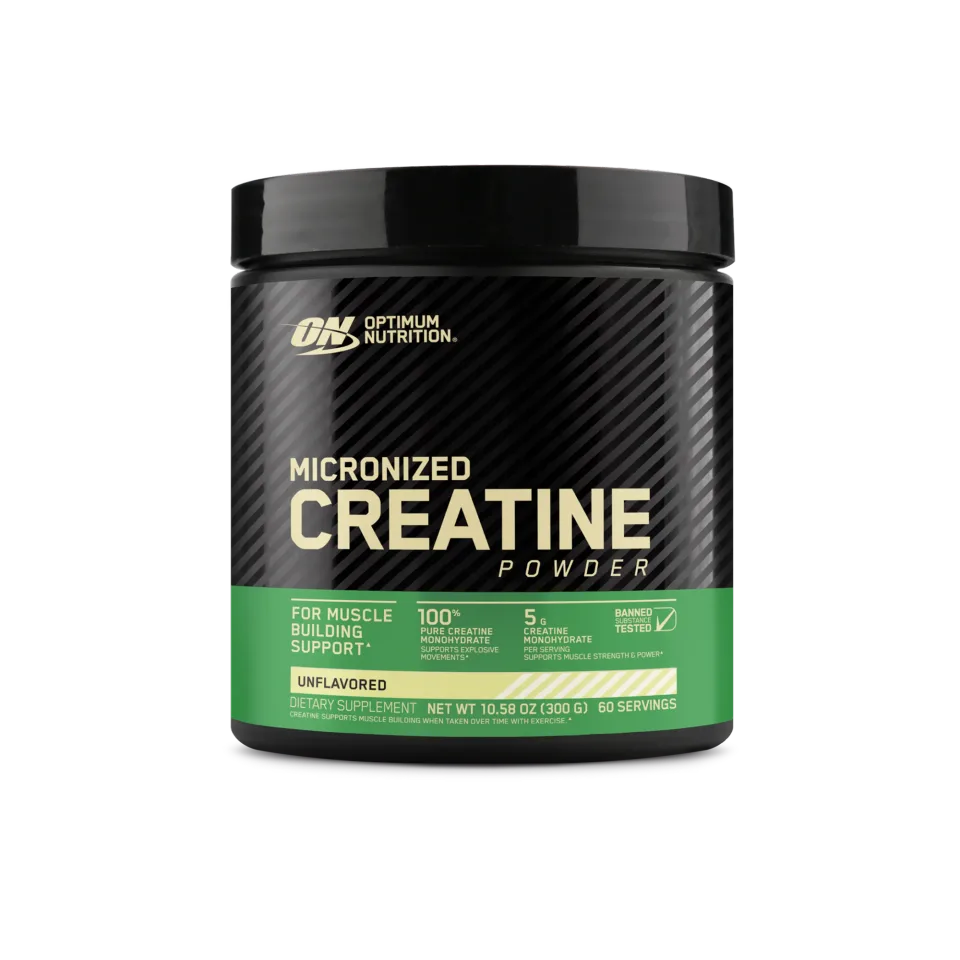
- Best overall: Optimum Nutrition Micronized Creatine delivers 5 grams of micronized monohydrate per scoop, is Informed Choice certified according to ON [19], and costs far less per serving than the premium picks below.
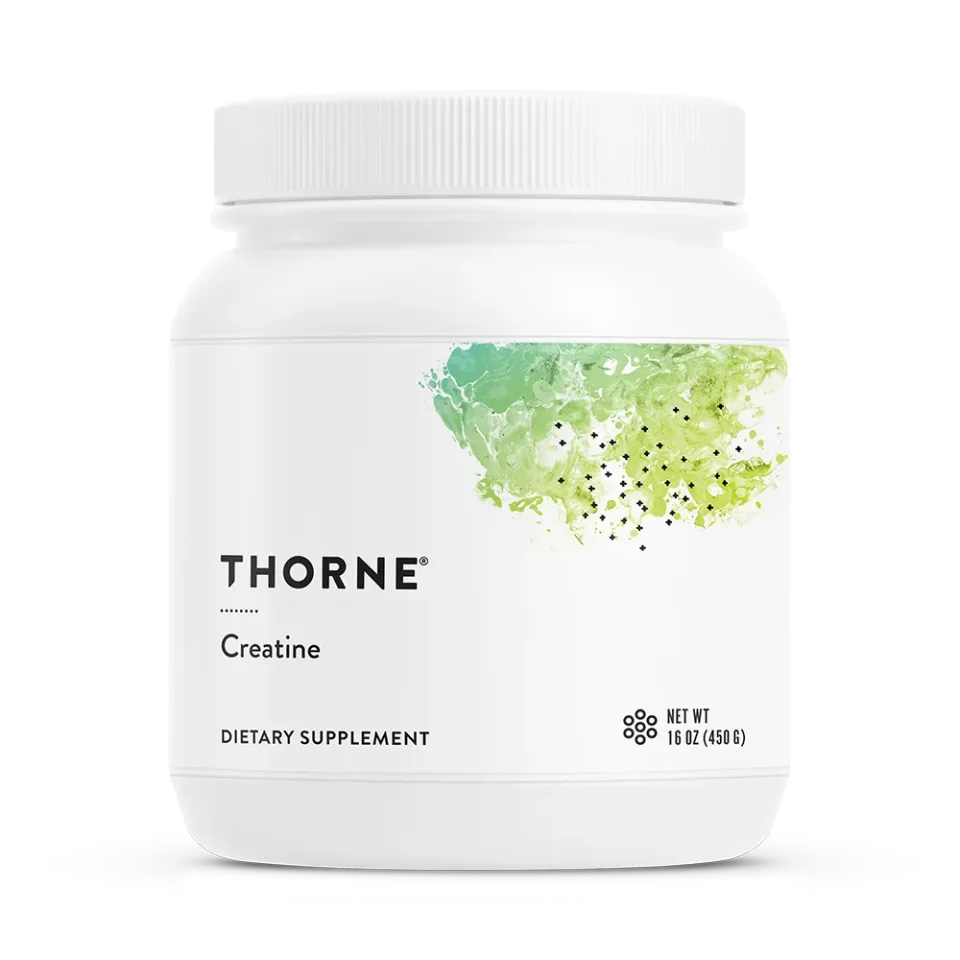
- Best for tested athletes: Thorne Creatine is NSF Certified for Sport, with nothing else in the tub [20].
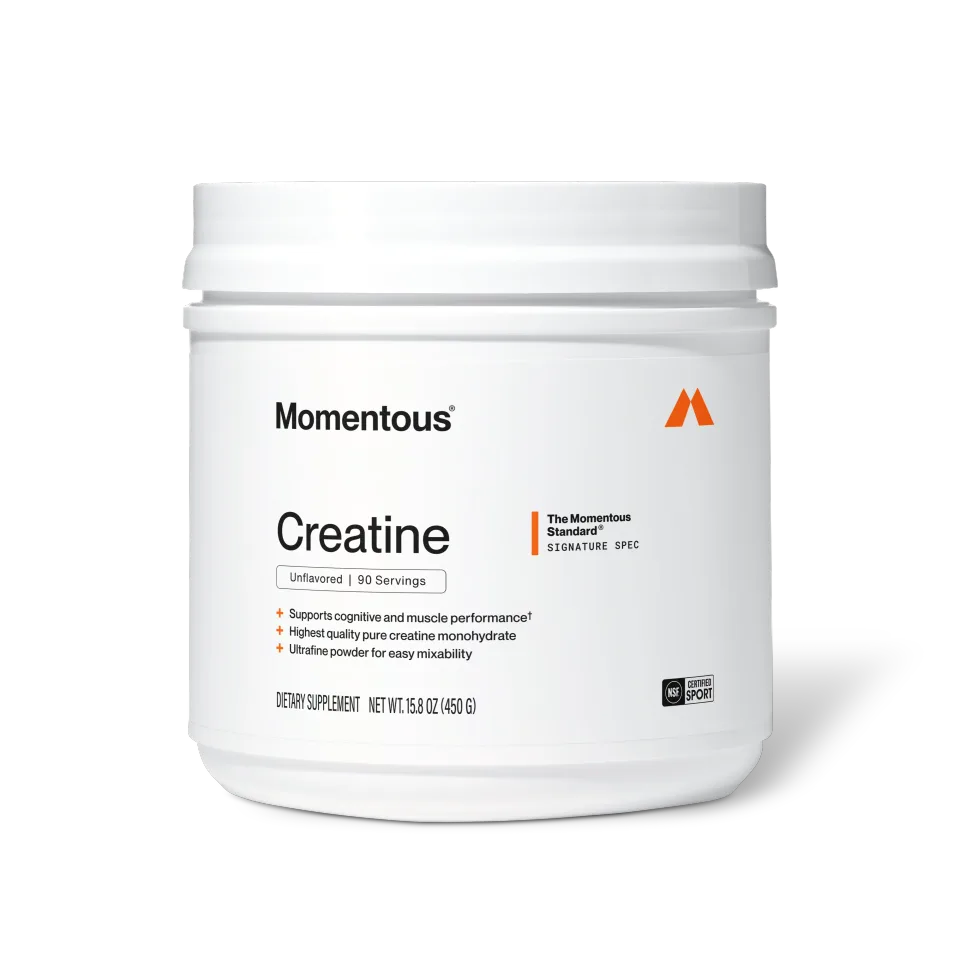
- Best premium: Momentous Creatine is also NSF Certified for Sport [20]. Longtime fans should note that the brand says it no longer uses Creapure.
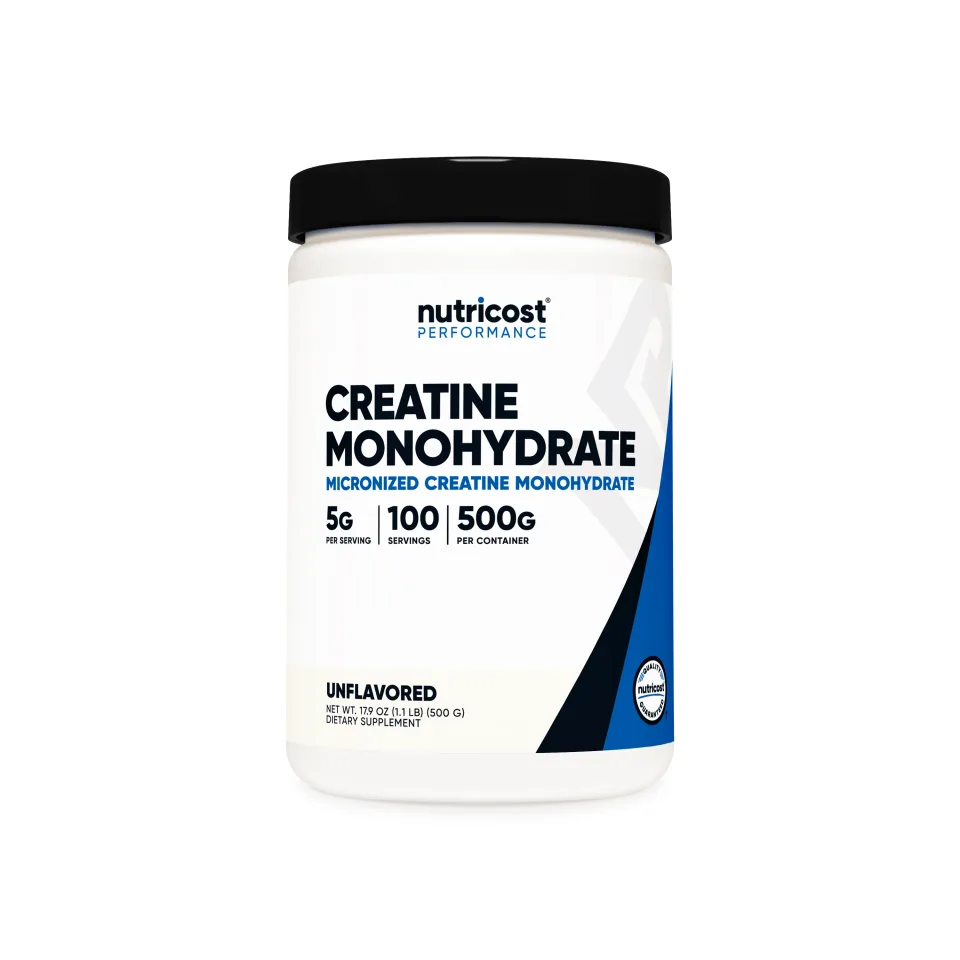
- Best budget: Nutricost Creatine Monohydrate is the value pick. Nutricost says it's third-party tested, but it isn't NSF Certified for Sport [20].
Prefer gummies? Create Creatine Monohydrate Gummies are our top-rated option, with 1.5 grams of creatine monohydrate per gummy and a listing on NSF's Certified for Sport registry [20]. Know the trade-offs: a full 4.5-gram serving takes three gummies and costs several times more than powder, and Create was among the brands that missed their label claims in NOW Foods' early-2024 gummy tests, although its result came close [16].
Browse every option in our creatine category, see the full best creatine supplements ranking, or watch the underlying reviews on our video hub.
The bottom line
Creatine monohydrate is one of the few supplements with decades of consistent research behind it. Take 3–5 grams every day, skip the fancy forms, choose a third-party-tested product, and give it three to four weeks. It won't replace training or diet, but it may help you get a little more out of both.
Frequently asked questions
How long does creatine take to work?
Should I take creatine on rest days?
What happens when you stop taking creatine?
Can teenagers take creatine?
Does creatine work for women?
References
- 1.International Society of Sports Nutrition position stand: safety and efficacy of creatine supplementation in exercise, sport, and medicine — Journal of the International Society of Sports Nutrition (2017)
- 2.The Effects of Creatine Supplementation on Upper- and Lower-Body Strength and Power: A Systematic Review and Meta-Analysis — Nutrients (2025)
- 3.Influence of age, sex, and type of exercise on the efficacy of creatine supplementation on lean body mass: A systematic review and meta-analysis of randomized clinical trials — Nutrition (2022)
- 4.Effect of creatine supplementation during resistance training on lean tissue mass and muscular strength in older adults: a meta-analysis — Open Access Journal of Sports Medicine (2017)
- 5.Common questions and misconceptions about creatine supplementation: what does the scientific evidence really show? — Journal of the International Society of Sports Nutrition (2021)
- 6.The effects of creatine supplementation on cognitive function in adults: a systematic review and meta-analysis — Frontiers in Nutrition (2024)
- 7.Creatine Supplementation and Acute Sleep Deprivation: A Systematic Review of Cognitive, Psychomotor, and Mood Outcomes — Journal of Integrative and Complementary Medicine (2026)
- 8.Creatine supplementation and endurance performance: surges and sprints to win the race — Journal of the International Society of Sports Nutrition (2023)
- 9.Bioavailability, Efficacy, Safety, and Regulatory Status of Creatine and Related Compounds: A Critical Review — Nutrients (2022)
- 10.Muscle creatine loading in men — Journal of Applied Physiology (1996)
- 11.Timing of Creatine Supplementation around Exercise: A Real Concern? — Nutrients (2021)
- 12.A short review of the most common safety concerns regarding creatine ingestion — Frontiers in Nutrition (2025)
- 13.Three weeks of creatine monohydrate supplementation affects dihydrotestosterone to testosterone ratio in college-aged rugby players — Clinical Journal of Sport Medicine (2009)
- 14.Does creatine cause hair loss? A 12-week randomized controlled trial — Journal of the International Society of Sports Nutrition (2025)
- 15.What Do Athletes Need to Know About Creatine? — U.S. Anti-Doping Agency (USADA)
- 16.NOW Reports Widespread Failings in Creatine Gummy Tests — Nutraceuticals World (2024)
- 17.What Our Mark Means — NSF Certified for Sport
- 18.Common Ingredient Profiles of Multi-Ingredient Pre-Workout Supplements — Nutrients (2019)
- 19.Are your products Informed Choice certified? — Optimum Nutrition support
- 20.Certified Product Results — NSF Certified for Sport registry, search for “creatine” (2026)
This article is for general information and isn’t medical advice. Talk to a doctor or registered dietitian before starting a supplement, especially if you’re pregnant, take medication or have a health condition. Health disclaimer
Updated October 7, 2026 · We may earn a commission when you buy through our links — it never affects our scores.