Electrolytes Explained: Who Needs Them, and How Much Sodium Is Too Much?
Electrolyte mixes range from 55 mg to 1,000 mg of sodium per serving. Here's who actually benefits, how to match a mix to your sweat, and when it's just extra salt.
8 min read17 sources
On this page
Electrolyte drinks have migrated from marathon aid stations to office desks, gym bags and TikTok Shop carts. The mixes on the shelf now range from about 55 mg of sodium per serving to 1,000 mg [1, 2], which means some are basically flavored water and others are serious salt replacement. Whether you need one, and which one, comes down to how much you sweat and for how long.
What electrolytes actually do
Electrolytes are minerals that take on an electric charge when dissolved in body fluids such as blood. They help balance the water in your body and keep nerves and muscles working, and heavy sweating, vomiting or diarrhea can knock them out of balance [3]. Sweat carries them out, but not in equal amounts: it's mostly sodium and chloride, with relatively little potassium and only trace amounts of minerals such as magnesium and calcium [4].
| Electrolyte | Main jobs | Loss in sweat |
|---|---|---|
| Sodium | Fluid balance, nerve and muscle function | The largest by far |
| Chloride | Fluid balance and blood volume; travels with sodium | Large, alongside sodium |
| Potassium | Cell, heart and muscle function | Modest |
| Magnesium | Muscle, nerve and heart function | Small |
| Calcium | Bones and teeth; muscle function | Small |
That's why sodium dominates the hydration conversation. You lose relatively little potassium in sweat, and food is the better way to get it: potatoes with the skin, beans, lentils, citrus, bananas and yogurt are all rich sources [5].
How much do you actually sweat?
Two numbers determine how much sodium you lose: how much you sweat, and how salty that sweat is. Both vary enormously from person to person [4].
- Sweat rate in athletes typically runs from about half a liter to two liters per hour (roughly 17 to 68 ounces), and occasionally more than three, depending on body size, intensity, heat, humidity and fitness [4].
- Sweat sodium ranges from a few hundred milligrams to well over 1,000 mg per liter of sweat, influenced by genetics, diet and heat acclimatization [4]. Once your body adapts to the heat, you tend to sweat more but lose less sodium in each liter [6].
Multiply the two and the spread gets wide. Someone losing a liter of relatively dilute sweat in an hour might shed a few hundred milligrams of sodium, while a salty sweater running for two hours in summer heat could lose several thousand. Measured sodium losses in athletes range from about 0.2 to 7.3 grams per hour [6].
A simple sweat test
Weigh yourself right before a typical one-hour workout, note how much you drink during it, then towel off and weigh yourself again in the same clothing. Each pound lost is roughly 15 to 16 ounces of fluid; add what you drank, subtract any bathroom breaks, and you have an approximate hourly sweat rate for those conditions [6]. Sports-medicine guidance aims to keep fluid losses during exercise under about 2% of body weight, since bigger deficits can hurt performance [6].
Pro tip: Repeat the weigh-in on a cool day and a hot one. Your hourly losses can change a lot with the weather, so one number won't fit every session.
Who actually benefits from an electrolyte mix
The National Athletic Trainers' Association's view is that water alone should do for activity under an hour if you eat a balanced diet, while longer sessions, hard intervals and extreme heat can justify adding carbohydrate and electrolytes [6]. In practice, electrolyte drinks make the most sense when sweat losses are high or sustained:
- Long sessions: continuous exercise lasting more than about an hour, such as long runs, rides, hikes or tournaments
- Heat and humidity: summer training, hot yoga, outdoor jobs and two-a-day practices
- Heavy or salty sweaters: people who drench their clothes or know from testing that their sweat runs salty
They're usually unnecessary for a 45-minute lift in an air-conditioned gym, a brisk walk or a desk day. And if you're sick with vomiting or diarrhea, particularly with children or older adults, follow a clinician's guidance rather than a product label.
How much sodium is too much?
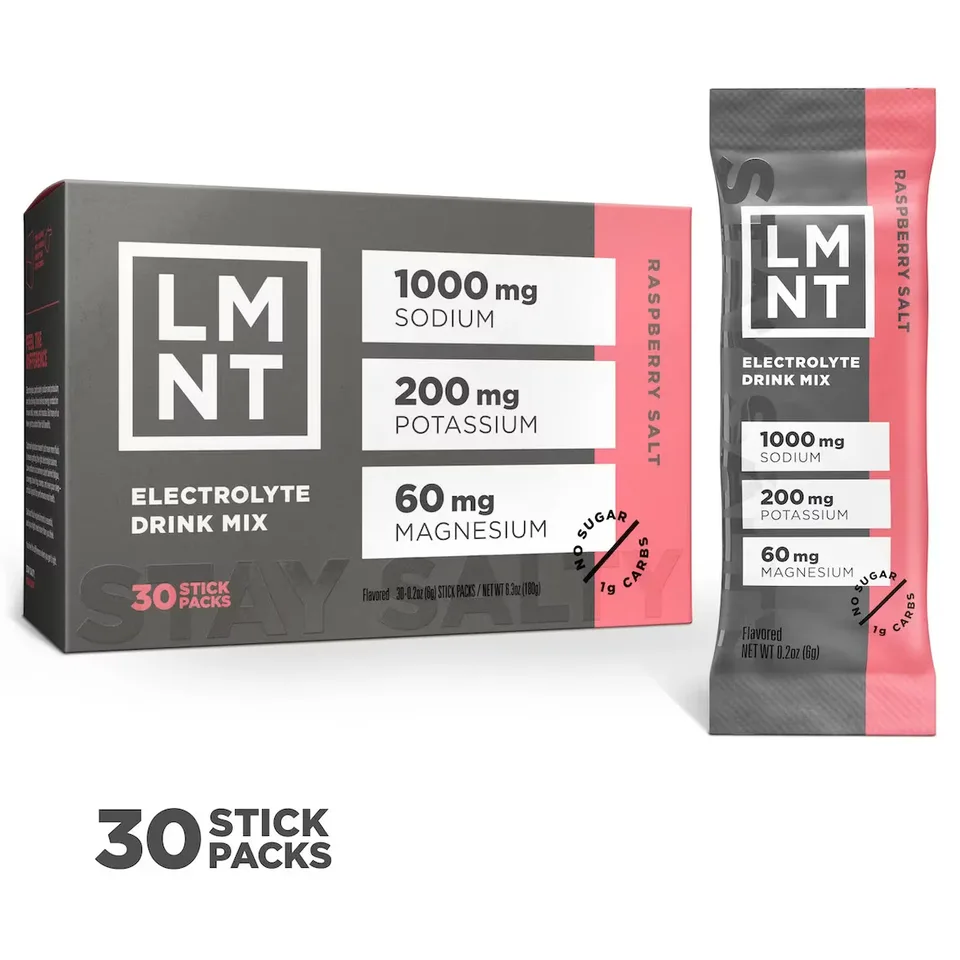
The Dietary Guidelines for Americans advise everyone 14 and older to keep sodium below 2,300 mg a day [7], and the FDA estimates Americans already average about 3,400 mg [8]. Against that backdrop, one 1,000 mg stick of LMNT supplies more than 40% of the daily limit before a single meal, and two sticks on a rest day nearly reach it by themselves.
Context matters, though. The same guidelines note that highly active people may benefit from extra sodium to offset what they lose in sweat [7]. The goal is to replace what you lose, not to add salt you never sweated out.
- Training days: mixes with roughly 300 to 500 mg per bottle suit most hour-plus workouts; around 1,000 mg is designed for long, hot sessions and heavy sweaters.
- Rest days: food usually covers you. If you want flavor, pick a low-sodium, zero-sugar mix.
Safety note: Eating more sodium raises the risk of high blood pressure [8], and poor kidney function or certain blood pressure medicines can push potassium dangerously high [5]. If you have high blood pressure, kidney disease or heart failure, or take diuretics or other medications that affect sodium and potassium, talk to your doctor before using these mixes regularly.
The other extreme: too much water
Drinking far more fluid than you sweat, typically during marathons, ultras and long hikes, can dilute blood sodium to dangerous levels, a condition called exercise-associated hyponatremia. The main cause is overdrinking low-sodium fluids, sports drinks included [6]. It's less rare than many people assume: among 2002 Boston Marathon finishers who gave blood samples, about 1 in 8 had low blood sodium and roughly 1 in 170 had critically low levels. Gaining weight during the race was a key warning sign, and drinking sports drinks instead of water didn't change the risk [9].
Electrolyte pills don't cancel out overdrinking, either. At a 100-mile trail race where almost every runner used sodium supplements, the finishers who became hyponatremic had taken just as much sodium as everyone else; drinking too much was what set them apart [10]. Drink to thirst, or to a plan based on your measured sweat rate, and don't finish heavier than you started [6].
Reading an electrolyte label
Here's how the five mixes in our electrolyte rankings compare per serving, based on each brand's label. Note the water volume: DripDrop's stick is designed for 8 ounces, so a standard 16-ounce bottle takes two [11], while Nuun and Liquid I.V. are made for 16 ounces [12, 13].
| Product | Sodium | Potassium | Magnesium | Sugar |
|---|---|---|---|---|
| LMNT Zero Sugar | 1,000 mg | 200 mg | 60 mg | 0 g |
| Liquid I.V. Hydration Multiplier | 500 mg | 370 mg | — | 11 g |
| DripDrop ORS | 330 mg | 180 mg | 40 mg | 7 g |
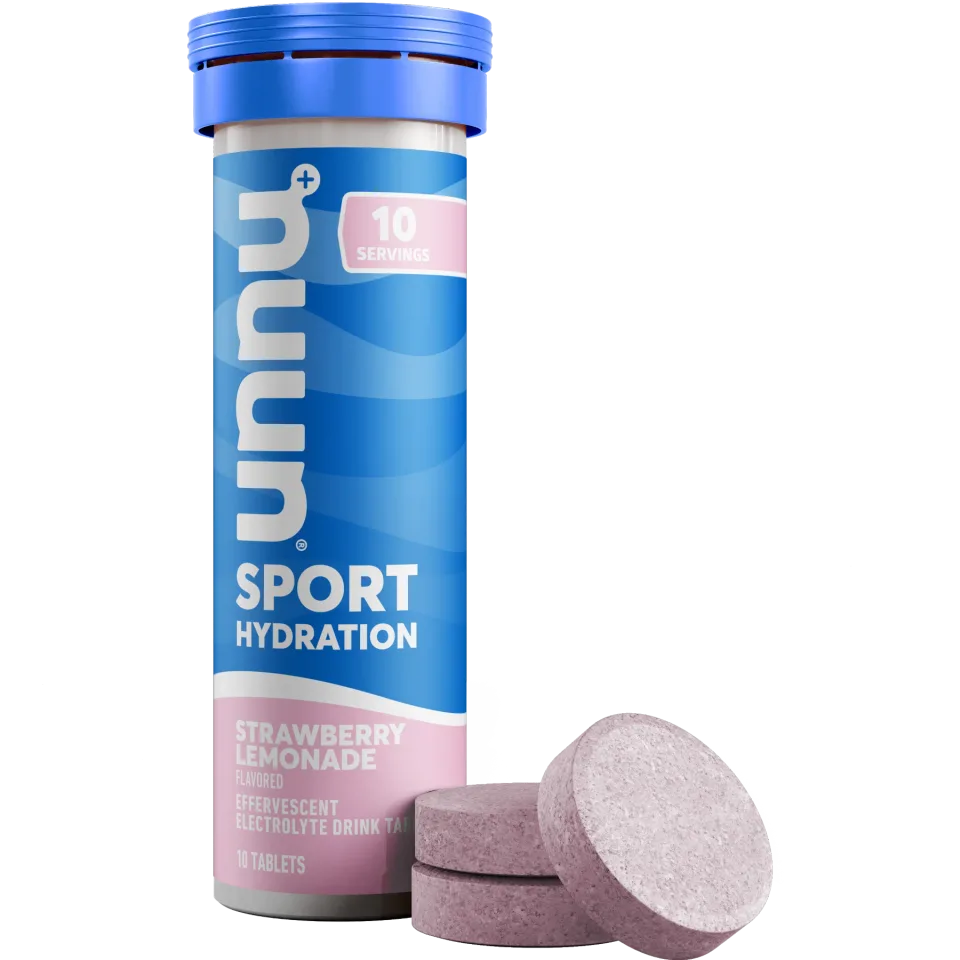
| Nuun Sport | 300 mg | 150 mg | 25 mg | 1 g |
| Ultima Replenisher | 55 mg | 250 mg | 100 mg | 0 g |
Values per stick, tablet or scoop from each brand's nutrition label [1, 2, 11–13]; formulas change, so check the current package. A dash means magnesium isn't among the product's listed key nutrients.
When you read any label, check four things:
- Sodium per serving and per bottle. Normalize to the amount of water you actually drink.
- Sugar, and why it's there. In the small intestine, glucose and sodium cross the gut wall together through a shared transporter, pulling water along, which is the principle behind oral rehydration solutions [14]. Carbs also fuel long efforts [6]. For desk sipping, though, 7 to 11 g per serving adds up quickly.
- Supporting minerals. Potassium and magnesium are nice extras. The official upper limit for magnesium from supplements is 350 mg a day for adults, set because larger doses can cause diarrhea; some researchers think that limit is conservative, but there's still no reason to stack several magnesium products [15].
- Testing. Of the five products compared here, only DripDrop's oral rehydration powders are on NSF's Certified for Sport registry, in several flavors. Liquid I.V. has one sugar-free flavor listed, but not the standard Hydration Multiplier [16]. LMNT says every batch is third-party tested for label accuracy, microbes and heavy metals [17]. Drug-tested athletes should verify certification for the exact product and flavor before relying on it.

Matching a mix to your day
| Your situation | Sodium per serving | Sugar | Good fit from our rankings |
|---|---|---|---|
| Short gym session, cool room | None needed | None | Water, or Ultima if you want flavor |
| All-day sipping | Under ~300 mg | None | Ultima Replenisher |
| Typical 60- to 90-minute workout | ~300–500 mg | Low to moderate | Nuun Sport or Liquid I.V. |
| Long, hot sessions or heavy sweating | ~700–1,000 mg | Optional; useful on long efforts | LMNT, plus carbs from food or sports fuel |
| Hot-weather days and travel | Moderate, ORS-style | Some glucose | DripDrop |
Liquid I.V. is easy to find and a reviewer favorite for flavor; just count its 11 g of added sugar if you drink it daily [13].

DripDrop's oral-rehydration-style recipe shines on hot days and after big sweat sessions, but its 8-ounce serving makes it a pricey everyday habit.

A simple game plan
- Before training: Start well hydrated. For most recreational exercisers, that just means normal, salted meals and your usual fluids; there's no need to chug extra water beforehand [6].
- During training: Under an hour, water is fine. Beyond that, or in heat, use a mix matched to your sweat, plus carbohydrates for long endurance work [6].
- After training: Replace what you lost. If you need to recover within a few hours, sports-medicine guidance suggests drinking 100 to 150% of the fluid you lost, or roughly 16 to 24 ounces per pound, alongside a meal with some salt, since food helps your body hold on to fluid [6]. With a longer break, normal eating and drinking usually restore the balance.
- Rest days: Let food do the work.
Want to see how these mixes hold up in real use? Our video library collects independent reviews for every product in the electrolytes and hydration category, and our methodology page explains how each FR Score is built.
The bottom line
Electrolyte mixes are useful tools, not daily necessities. Match sodium to your sweat: little or none for short sessions and desk days, 300 to 500 mg for typical workouts, and around 1,000 mg only for long, hot or very sweaty efforts. Don't drink beyond what you sweat out, and if you're managing blood pressure, kidney or heart health, get a clinician's input first.
Frequently asked questions
Is it bad to drink electrolyte drinks every day?
Do I need electrolytes for a short workout?
Are sugar-free electrolyte drinks better?
How much water should I drink during a workout?
When should I drink electrolytes: before, during or after exercise?
References
- 1.Original Variety pack Daily Electrolyte Drink Mix — Ultima Replenisher (product page)
- 2.LMNT Zero-Sugar Electrolytes — LMNT (product page)
- 3.Fluid and Electrolyte Balance — MedlinePlus, U.S. National Library of Medicine
- 4.Sweating Rate and Sweat Sodium Concentration in Athletes: A Review of Methodology and Intra/Interindividual Variability — Sports Medicine (2017)
- 5.Potassium in diet — MedlinePlus Medical Encyclopedia, U.S. National Library of Medicine
- 6.National Athletic Trainers' Association Position Statement: Fluid Replacement for the Physically Active — Journal of Athletic Training (2017)
- 7.Dietary Guidelines for Americans, 2025–2030 — U.S. Department of Agriculture and U.S. Department of Health and Human Services (January 2026)
- 8.Sodium in Your Diet — U.S. Food and Drug Administration
- 9.Hyponatremia among runners in the Boston Marathon — The New England Journal of Medicine (2005)
- 10.Sodium Supplementation and Exercise-Associated Hyponatremia during Prolonged Exercise — Medicine & Science in Sports & Exercise (2015)
- 11.Bold Variety Pack Electrolyte Powder | 32 Hydration Packets — DripDrop (product page)
- 12.Nuun Sport Hydration Tablets for Active Hydration — Nuun (product page)
- 13.Lemon Lime Electrolyte Powder Sticks — Liquid I.V. (product page and nutrition label)
- 14.Managing Acute Gastroenteritis Among Children: Oral Rehydration, Maintenance, and Nutritional Therapy — CDC, Morbidity and Mortality Weekly Report: Recommendations and Reports (2003)
- 15.Perspective: Call for Re-evaluation of the Tolerable Upper Intake Level for Magnesium Supplementation in Adults — Advances in Nutrition (2023)
- 16.Certified Product Results — NSF Certified for Sport registry, search for “DripDrop” (2026)
- 17.Quality & Testing — LMNT
This article is for general information and isn’t medical advice. Talk to a doctor or registered dietitian before starting a supplement, especially if you’re pregnant, take medication or have a health condition. Health disclaimer
Updated October 7, 2026 · We may earn a commission when you buy through our links — it never affects our scores.